
RISE-US: Research for Indigenous Studies & Engagement in the United States
RISE-US (pronounced “ryze-uhs”) is a research program focusing on Indigenous Peoples in the United States that promotes visibility and education, research, and collaborations in Indigenous Studies.
About
RISE-US: Research for Indigenous Studies & Engagement was launched in July 2025 to build on and further the successes of the 2023 Native American Studies Initiative (NASI). While NASI included studies related to Native Americans broadly (North, Central, and South), RISE-US concentrates on Indigenous Peoples in the geographic area now known as the United States. This growing program is the culmination of years of effort by faculty, students, staff, and community members.
RISE-US at the Kenan Institute for Ethics supports and promotes the scholarly community at Duke University through national and international research, partnerships, and engagements focused on American Indian, Kānaka Maoli, and Alaskan Native Corporation studies. These areas of study are necessarily informed by Indigenous Studies as a global field. Collaborations and learning across national and international lines are essential components of this research.
With its origins as the first Native American Studies initiative at Duke University, and now reimagined as a new program, RISE-US elevates the university’s standing, bringing it into national and international conversations on the studies of science, culture, history, and policy with Indigenous Peoples in the United States. In doing so, RISE-US also advances Duke’s commitment to community-engaged and community-accountable research.
RISE-US receives additional support from the Office of the Provost and the Christensen Fund.
What We Do
RISE-US focuses on three main areas:
- Increasing visibility and education about Indigenous Nations and Peoples in the United States on Duke University’s campus
- Supporting Duke faculty, staff, and students with their ethical, community-engaged research with Indigenous Peoples in the United States
- Forming collaborations on national and international levels across educational institutes and with Indigenous Nations in the United States
Year of American Indian Pop Culture
The Year of American Indian Pop Culture (2025–2026) is a series of events and exhibitions that brings together artists, scholars, and American Indian citizens to explore the intersections of creative representation, Indigenous innovation, and revolutionary futurisms. Through public programming and scholarly discussions, this yearlong focus aims to increase visibility and deepen understandings of how American Indian creators assert identity, challenge stereotypes, and shape popular media.
Click here or the banner above to see the full listing of events!
CHEROKEE LANGUAGE PROGRAM
In fall 2024, Duke launched its first American Indian language program with the establishment of a Cherokee Language course series.
This course series spans four semesters for learners who wish to gain greater proficiency and knowledge of the Cherokee language. It is primarily offered online to students at Duke University, Vanderbilt University, and University of Virginia, as well as Duke employees and community members who are interested in auditing. The courses include hybrid sessions at Duke for the students who are local, and this series satisfies the Trinity Foreign Language (FL) requirement.
These courses are taught by Gilliam Jackson, citizen of the Eastern Band of Cherokee Indians, who resides in Snowbird, North Carolina, in the foothills of the Great Smoky Mountains. A fluent speaker, Mr. Jackson began teaching sixth grade and has since taught at UNC-Asheville and Stanford University. Early in his professional career, he recognized the need to preserve the history, language, and culture of his isolated community. He has recorded audio and video of several oral histories of the Snowbird Community near Robbinsville, NC. Listen to his comments here.
PROJECTS
- Native American Studies Minor (in progress)
- Duke Institutional History Project (DIHP)
- Cherokee Industrial School (in progress)
- Duke Farm Southeastern American Indian Garden (ongoing)
- Duke Gardens Southeastern Indigenous Peoples Garden (Spring 2025–Fall 2026)
People
 Director
Courtney Lewis
Associate Professor, Cultural Anthropology
Enrolled citizen of the Cherokee Nation
 Faculty Member
Ryan Emanuel
Associate Professor, Nicholas School of the Environment
Lumbee enrolled
 Faculty Member
Anna Fetter
Assistant Professor, Department of Psychiatry & Behavioral Sciences
Enrolled member of the Saint Regis Mohawk Tribe
 Faculty Member
Orin Starn
Professor, Cultural Anthropology
 Faculty Member
Alika Bourgette
Assistant Professor, History
Kanaka Maoli member
 Graduate Student Representative
Belton Moore
Public Policy and Business Administration
Enrolled member of the Lumbee tribe
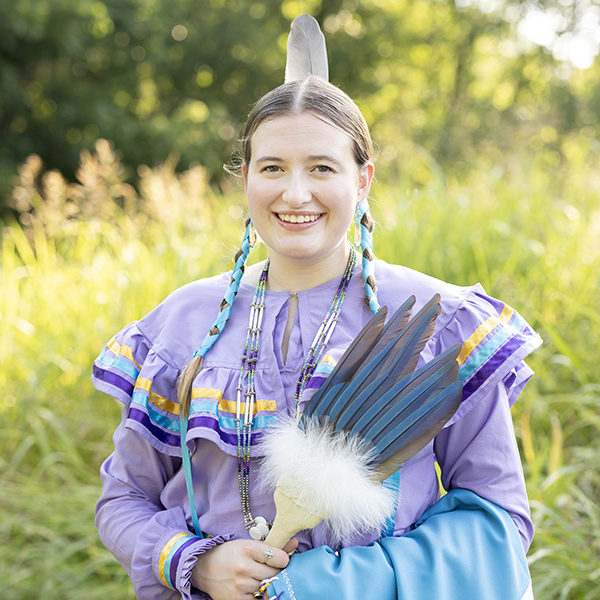 Undergraduate Student Representative
Roslyn Bellscheidt
Neuroscience
Enrolled member of the Citizen Potawatomi Nation

Ex Officio
Linda Daniel
Duke Libraries’ Teaching and Learning Strategist
Resources & Updates
LAND ACKNOWLEDGMENT & STATEMENT ON SOVEREIGNTY
RISE-US officially recommends a hold on “land acknowledgements” at Duke University due to their problematic nature of performativity, contributing to erasure of contemporary Native people and the avoidance of accountable action steps. See here for more information about land acknowledgments at Duke and here for an article on rethinking land acknowledgments.
Instead, we encourage faculty, students, and staff to encourage their audiences to actively support Native Studies faculty, students, and staff on campus with a “calling in” for Duke accountability by promoting active engagement with the Native American/Indigenous Student Alliance petition, which can be found here.
NASI supports the Duke Asian American & Diaspora Studies Program Statement on Affirmative Action, which can be found here.
We endorse the Cherokee Scholars’ Statement on Sovereignty and Identity, which can be found here.
- Native American/Indigenous Student Alliance (NAISA)
- NAISA petition
- Native American Graduate and Professional School Alliance (NAGPSA)
- Native American Law Students Association (NALSA)
- Society for Advancement of Chicanos/Hispanic and Native Americans in Science (SACNAS)
- Alpha Pi Omega Sorority
- Duke Native American/Indigenous Alumni (DNAIA)
As of 2025, the cluster hire is paused.
Trinity College of Arts & Sciences is excited to support an ongoing cluster hire in Native American Studies. This initiative was instigated by efforts from our student group, the Native American/Indigenous Student Alliance (NAISA), and is a critical part of expanding Duke’s renowned curriculum and distinguished faculty. NAISA is working closely with this search committee and individual departments throughout the hiring process.
NAISA welcomes these new faculty members to join us in crafting Native American Studies and Global Indigeneity visions, partnerships, and ethically engaged research across Duke’s campuses and worldwide.
News
Duke to Offer New Cherokee Language Course Series (Duke Today)
Duke to offer Cherokee course series in fall 2024 as first-ever Indigenous language offering (The Chronicle)
Duke to offer new Cherokee language course series (Cherokee Phoenix)
For the first time in its history, Duke University will offer a Cherokee language course (WUNC)
A school banned Indigenous students from using their language. A century later, it’s teaching Cherokee (The Guardian)
The history behind Duke University’s first Cherokee language course (WUNC)
The Power of the Cherokee Language at Duke (Duke Today)
Contact
Subscribe to the RISE-US newsletter
Follow us on Instagram @dukeriseus.
For general questions and comments, email rise.us@duke.edu.
 Administrative Manager
Laura Pinto-Coelho
Research Associate, Kenan Institute for Ethics
 Communications Assistant
Naomi Goldson
Psychology with Visual & Media Studies minor
Lumbee enrolled