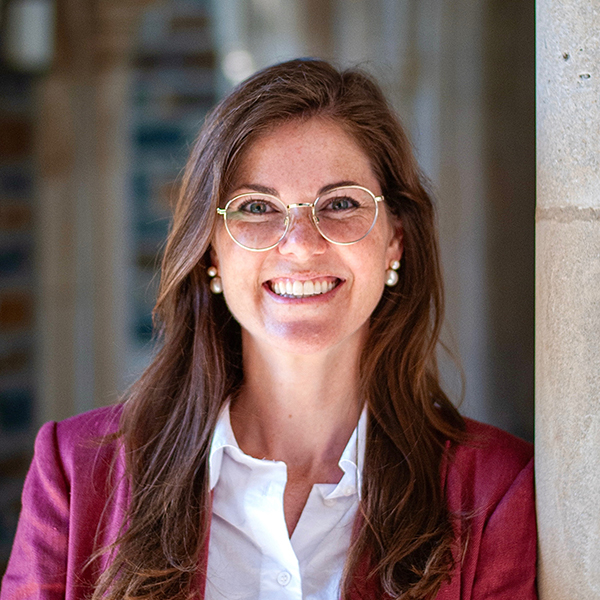
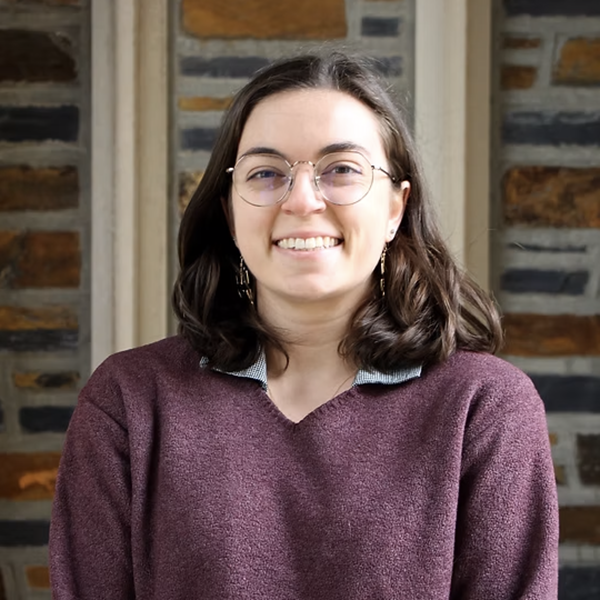
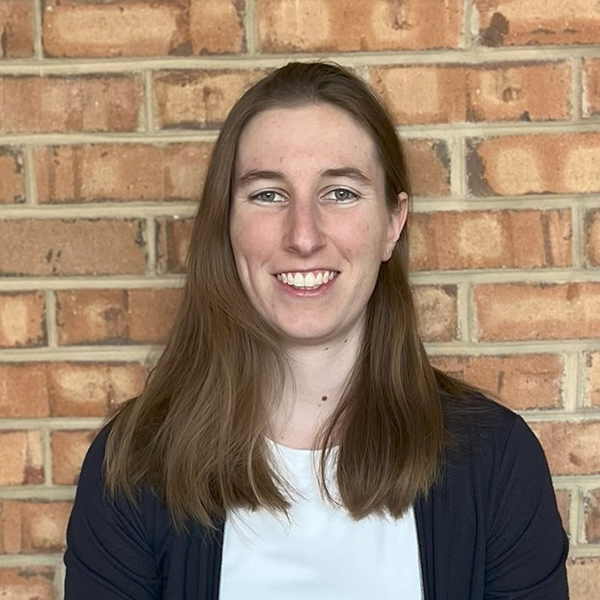
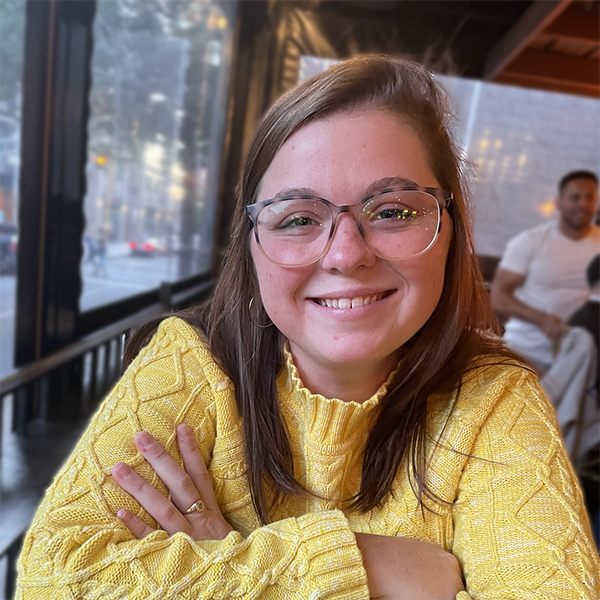
The Kenan Institute for Ethics is pleased to announce the 2026 cohort of Teaching on Purpose fellows.
Teaching on Purpose brings doctoral students and faculty together to explore what it means to be a good teacher of undergraduates and to cultivate educational practices that will help their students flourish. It is a program of The Purpose Project at Duke, a collaboration between the Kenan Institute for Ethics, Duke Divinity School, and the Office of the Provost.
This year’s eighteen Teaching on Purpose fellows represent four Duke University schools — the Fuqua School of Business, the Graduate School, the Nicholas School of the Environment, and the Pratt School of Engineering — and 14 disciplines. As part of this unique, multidisciplinary community, fellows will meet weekly during the spring semester to explore fundamental questions about the purpose of college, learn how to engage students in meaningful learning, and gain insights from faculty.
Anna Paden-Carson
Anna-Paden Carson is a Ph.D. candidate in Romance Studies. Her research examines how early colonial writers in Spanish America framed the natural world as an object of knowledge, governance, and authority. Teaching is central to Anna-Paden’s scholarly identity, and she has advanced this commitment through Duke’s Certificate in College Teaching, the Preparing Future Faculty program, and serving as an instructor of record in the Spanish and Writing departments. Prior to graduate study, she was a Fulbright English Teaching Assistant in Colombia and taught in secondary education in the U.S. for five years, including two years with Teach For America. Anna-Paden holds an M.A. in Teaching and a B.A. from Washington and Lee University.
Clara dos Santos
Clara dos Santos is a Ph.D. candidate in the Biology Department with a strong background in molecular biology and biochemistry. Her research focuses on understanding how disruptions in ubiquitin-mediated regulation impact cellular metabolism, using integrative multi-omics approaches. Clara is particularly interested in how fundamental biological mechanisms translate into human health and disease. As an educator and mentor, she is passionate about supporting students from diverse backgrounds in STEM and believes mentorship is essential for building inclusive and collaborative scientific communities. Clara completed her undergraduate education in Brazil, where she developed a strong interest in scientific communication and education.
Kerry Eller
Kerry Eller is a Ph.D. candidate in Biomedical Engineering. Her research focuses on cervical cancer prevention and making screening more accessible for women and gender-minority patients. To do so, she is developing patient-centered technologies that lower barriers to screening and improve early detection. Alongside her research, she is involved in teaching and course development, supporting human-centered, project-based engineering courses. In these roles, she works with students to think about how the technical aspects of design connect to social context, ethics, and community partnership. She hopes to continue teaching courses that emphasize thoughtful engagement with real-world engineering problems.
Morgan Heckman
Morgan Heckman is a Ph.D. candidate in Mechanical Engineering and Materials Science. She received her B.S. in Physics from Roanoke College in 2019 and worked as a Laboratory Technician at the University of Maryland Baltimore School of Medicine before joining the Payne Lab at Duke in 2022. Her research focuses on inhalation exposure to nanomaterials and resulting interactions with lung fluid proteins and lipids. She hopes this work will lead to a greater understanding of the hazards of nanoparticle use in industrial settings. She enjoys mentoring students in the lab and engaging in community science outreach.
Morgan Hundley
Morgan Hundley is a Ph.D. Candidate in the Graduate Program in Religion. Her research primarily focuses on emotions, affect, and narrative in the Gospel of Luke and the Book of Acts. She explores how foundational narratives, such as New Testament texts, push and pull readers to think, believe, or feel something new. In the classroom, Morgan encourages students to consider how New Testament texts are regularly recruited and deployed today for persuasive, political, and ethical purposes across media ranging from Stephen King novels to policy making. Morgan holds a concentrated M.A.R. in New Testament from Yale Divinity School and an A.B. in Religious Studies and Classical Studies from Duke University.
Kateryna Husar
Kat Husar is a Ph.D. candidate in the Department of Statistical Science. Her primary research interests lie in causal inference, specifically focusing on advanced experimental design. She completed a dual Bachelor of Science degree in mathematics and data analytics from The Ohio State University. Beyond research, Kat is enthusiastic about teaching and mentorship. She is committed to making complex statistical concepts accessible and fostering responsible data usage among students. In her personal time, Kat enjoys baking treats for department tea time, spending quality time with friends and family, and enjoying the outdoors (provided the mosquitoes aren’t too active!).
Lauren Jenkins
Lauren Jenkins is a Ph.D. candidate in the University Program in Ecology, where she researches the climate drivers of forest seed production and their ripple effects on forest biodiversity. Driven by a simple curiosity about the world, Lauren sees education as the most powerful form of connection, a way to transform abstract concepts into moments of wonder. She is committed to fostering that same sense of discovery in others, believing that the best teaching happens when complex ideas become tangible and exciting enough to inspire new questions.
Adrienne Kafka
Adrienne Kafka is a third-year Ph.D. student in the Management and Organizations area at Fuqua. Her research is motivated by the broader question of why people struggle to collaborate effectively in solving pressing societal problems, particularly those involving inequality. To address this question, she examines the psychological processes that fuel disagreement and shape how people perceive and engage with diverse others across political, social, and organizational contexts. Before Duke, Adrienne received a B.A. in psychology and dance, with a minor in leadership, from Claremont McKenna College and worked as a talent and rewards consultant.
Kyungdo Kim
Kyungdo Kim is a Ph.D. candidate in the Department of Biomedical Engineering. He studies human movement analysis for neurological disorders using 3D kinematics and multimodal AI models. Originally from South Korea, he completed his undergraduate and master’s degrees at Seoul National University. He brings an entrepreneurial mindset and real-world hospital experience to his research, bridging clinical needs with scalable technology. Ultimately, his long-term goal is to enhance human health so people can live happier lives and fully realize their potential.
Tejas Luthra
Tejas Luthra is a Ph.D. candidate in Political Theory. His dissertation develops a democratic defense of internationalist political action, drawing on both normative political philosophy and early 20th century internationalism. His other interests are legal theory and normative political economy; he’s currently writing on the implications of transnational corporate power on republican political philosophy.
Anna Mackey
Anna Mackey is a Ph.D. candidate in the Department of Molecular Genetics and Microbiology. She received her B.S. in Mathematical Biology from The Ohio State University in 2020. Her research focuses on an environmental fungus that causes life-threatening infections in immunocompromised individuals. She studies how environmental conditions encountered during human infection influence mutation rates and adaptation to stressors such as antifungal drugs.
Bruce Mei
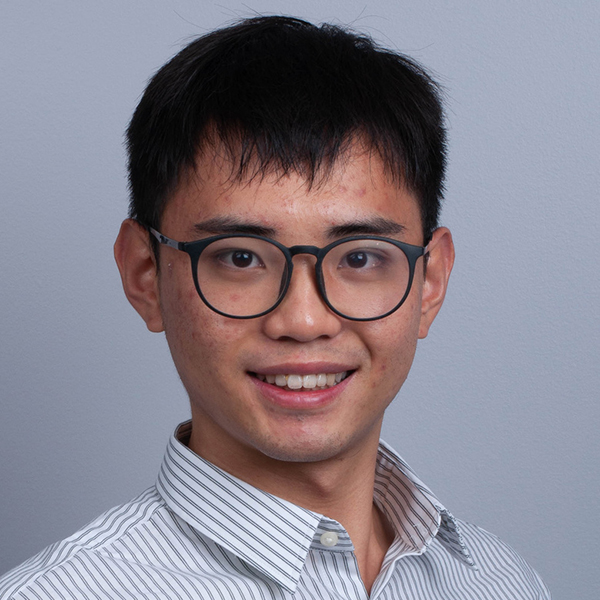
Bruce (Yuhan) Mei is a fourth-year Ph.D. student in Management and Organizations at the Fuqua School of Business. His research examines the cognitive and motivational origins of workplace disagreement, as well as strategies for transforming disagreement into productive dialogue, collaboration, and high-quality decisions in organizations. Through both research and teaching, Bruce strives to be a reliable mentor in developing future scholars and organizational leaders. He also learns from peers and mentors both inside and outside of academia to continually refine his research interests and address the most profound and relevant challenges facing managers and employees today. Bruce received his B.A. from University of California, Los Angeles, in Psychology and Communication Studies.
Jasmine Parham
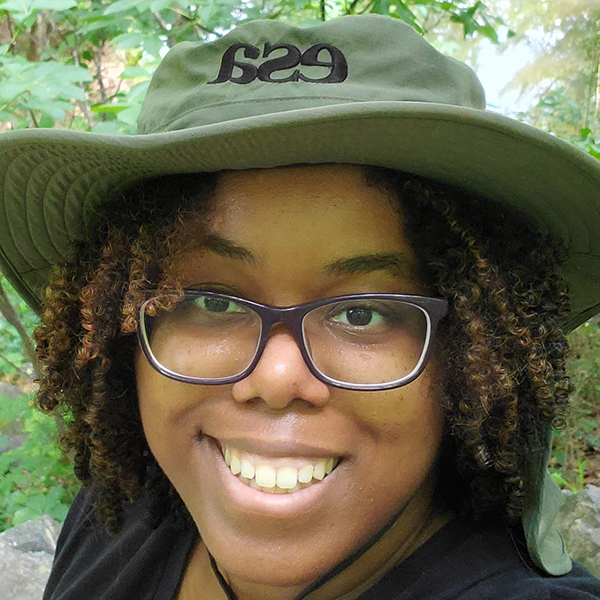
Jasmine Alexandria Parham is a Ph.D. candidate in Biology. She is a naturalist, whose research explores how mercury moves from aquatic environments into adjacent terrestrial systems, with a focus on riparian insectivores. Her prior teaching experience includes leading discussion sections and labs as a Teaching Assistant in introductory biology courses, animal behavior, and herpetology. Before graduate school, Jasmine designed and implemented science communication programs to communities about their local wildlife for the North Carolina Wildlife Resources Commission, and lead bird walks for people new to birding. As an educator, Jasmine believes that teaching should be built around frequent, low-stakes opportunities to experiment and gain feedback.
Anna Sheinberg
Anna Sheinberg is a Ph.D. candidate in Chemistry. She received a B.S. in Biochemistry from Elon University in 2022. Her research in the Warren lab focuses on using ultrafast, nonlinear spectroscopy techniques to image early-stage melanoma and develop methods for identifying or predicting metastatic potential. She carries the same curiosity and intentionality from research into teaching, driven by a commitment to helping all students succeed. Before graduate school, Anna taught at a school serving students with dyslexia, an experience that solidified her passion for inclusive, student-centered teaching. She hopes to teach at a liberal arts institution and grow as an instructor, helping students develop intellectual independence, critical thinking, resilience, and meaningful connections between chemistry and real-world experiences.
Justine Shih
Justine Shih is a Ph.D. candidate and NSF Graduate Research Fellow in Neuroscience, researching the processing of complex sounds in the macaque auditory cortex. Broadly, she is interested in the intersection between neuroscience and music. As an educator, Justine has assisted in teaching Psychology 101 and courses on perception and the brain, neuroscience laboratory techniques. She is also passionate about intentional mentorship in academia. Justine obtained dual Bachelor's degrees in Neuroscience and Music from the University of Chicago. Outside of research, Justine is a classical violinist and a singer-songwriter.
Taylor Thorsen
Taylor Thorsen is a Ph.D. candidate in Chemistry. Her research in the Vo-Dinh lab focuses on developing hybrid nanomaterials for SERS-based chemical sensing and integration into point-of-care diagnostic devices for infectious diseases and cancer. The interdisciplinary nature of nanoscience has shaped her teaching philosophy, which emphasizes collaboration across disciplines to explore ideas with significant real-world impact. At Duke, she has served as a TA for multiple lab courses and is co-chair for her department’s outreach team, helping design and lead STEM events for elementary and middle school students and their families. She received her B.S. in chemistry from the University of Maryland, Baltimore County in 2023.
Kate Turner
Kate Turner (she/her) is a doctoral candidate in English and studies the nineteenth-century British novel, queer theory, Marxist critical theory, and Gothic and sensation fiction. Her dissertation project deals with the relationship between Gothic fiction, theories of justice, and historical time. Teaching is her favorite part of academia: at Duke, she has taught an introductory writing course on children’s fiction and an English course on Gothic romance. She holds a B.A. in English and Critical Social Thought from Mount Holyoke College and credits her time there with her lifelong love of teaching and mentorship.
Guru Ulaganthan
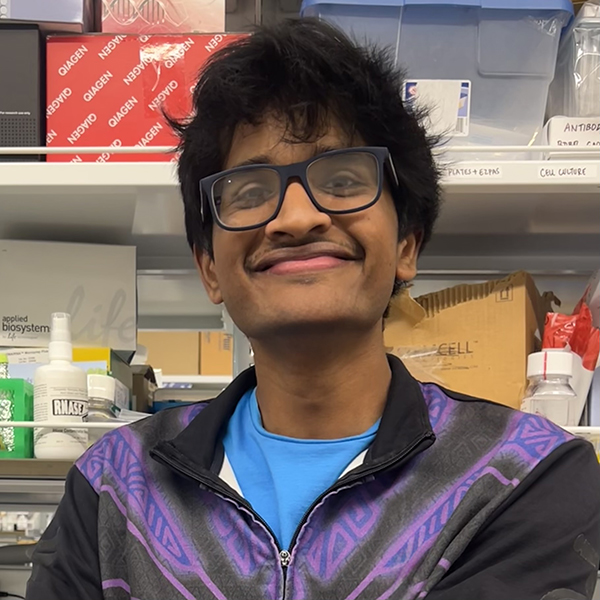
Gurugowtham (Guru) Ulaganathan is a third-year Ph.D. candidate in the Integrated Toxicology and Environmental Health Program in the Nicholas School of the Environment. He earned his bachelor’s degree in microbiology, Immunology, and Molecular Genetics from the University of California, Los Angeles in 2023. His current research focuses on how both maternal and paternal exposures to a range of environmental chemicals can shape offspring health outcomes, including those of future generations.

 The Kenan Institute for Ethics is pleased to announce the 2026 cohort of Teaching on Purpose fellows.